Harm Reduction - LIFT - Community Services

Harm Reduction

Harm reduction

Harm reduction is an evidence-based, public health approach aimed at reducing the associated risks of using unregulated substances. 

Harm reduction is a spectrum of supports including naloxone kits, clean syringes and pipes, drug checking, overdose prevention sites, treatment programs, and recovery-oriented services. 

At its core, harm reduction recognizes that people use substances for many reasons and that substance use does not preclude people from dignity, safety and care. 


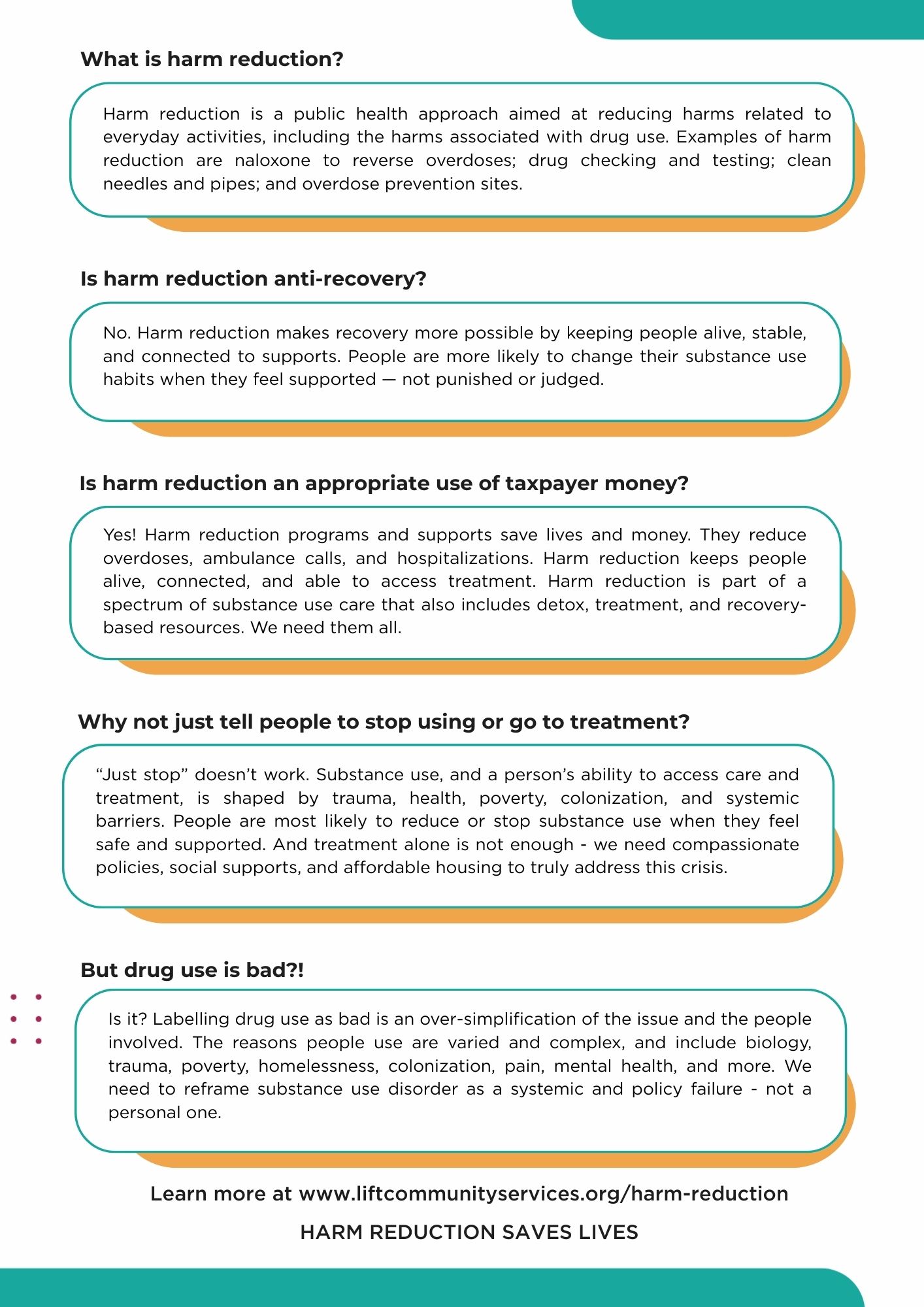
Harm Reduction Q&A

Unregulated drug toxicity (overdose) is now the leading cause of unnatural death in British Columbia for people aged 10 to 59, responsible for more deaths than homicides, suicides, accidents, and natural diseases combined.  

Because the unregulated drug supply is toxic and unpredictable, people often don’t know exactly what is in the substances they are consuming.  

Fentanyl, benzodiazepines, and other contaminants can show up in unknown amounts. These contaminants can be dangerous on their own or in combination with certain other compounds, and not knowing what is in any given substance dramatically increases the risk of health complications, accidental toxicities (overdose), and death.  

Overdoses kill people, and even when not fatal can have long lasting health consequences that not only affect individuals’ quality of life but put additional strain on our health care system.  

Drug toxicities/overdose and drug-related deaths are preventable. People aren’t overdosing because they’re irresponsible, they’re overdosing because the supply is unsafe.  

Fentanyl is a synthetic opioid that is up to 100 times stronger than morphine. It is used as a prescribed medication for treating severe pain, especially post-surgical, cancer, and chronic pain.

Fentanyl became the poster child for the toxic drug crisis when it started appearing in the unregulated drug supply in the 2010’s.  Even small doses of fentanyl (as little as 2 grams, or a few grains of salt worth) can be fatal. It is indetectable by sight, smell or taste.  

Because it is inexpensive to make and extremely potent, it is often used to cut other street drugs. In most cases, people do not know if their drugs are tainted with fentanyl and unless they get their drugs checked, it is impossible to tell. 

Fentanyl in the drug supply is especially dangerous for occasional/recreational users or people who have been taking a break from regular substance use as they do not have any built-up tolerance, increasing the risk of a fatal overdose.

The “unregulated drug supply” refers to the fact that street drugs are made and sold without any regulatory oversight. This means that there is no way to control what is in the drugs people buy.  

An unregulated drug supply is dangerous because people don’t know whether the drugs they’re taking are mixed with other substances (like fentanyl, benzodiazepines, or medetomidine) or the strength of what they’re taking, increasing risk of accidental overdose and/or other health complications. 

Additionally, there is no control over the accessibility or cost of drugs, which adds a burden to people with substance use disorder who may be dependent on the unregulated drug supply for their daily functioning. Individuals may end up spending large portions of their income on an unsafe supply, which can contribute to housing insecurity and involvement in survival-level crime.

An alternative to the unregulated drug supply is Legal Regulation, which would eliminate the criminality for purchasing, possessing and consuming drugs, and make licenced, medical-grade drugs available for use – much like we have with alcohol, tobacco, cannabis, prescription-grade narcotics, over-the-counter medications, and more.   
No. Participants accessing our Overdose Prevention Site bring their own substances to use in a safer, supervised environment. We do not give out drugs.

In our injectable Opioid Agonist Treatment (iOAT) program, prescribed pharmaceutical medications are administered by nursing staff in a clinical setting – just like any other medical treatment – but none of our programs supply unregulated/street drugs to participants.

No. We wish we could! Safe supply means highly regulated and legalized substances that would result in people knowing exactly what they’re using and in what quantities. 

In Canada, we have a completely unregulated, illegal, and unpredictable supply, which increases associated risks of substance use.  

See: “What does the “unregulated drug supply” mean” above for more details. 

Harm reduction is a public health approach aimed at reducing harms related to everyday activities.  

Some examples of harm reduction in daily life include sunscreen, seat belts and speed limits, condoms, and bike helmets. 

Harm reduction has developed into a political movement and philosophy with specific values, practices and programs that aim to reduce the harms associated with drug use, drug policies and drug laws.  

Examples include: 

  • Naloxone to reverse toxic drug poisonings 
  • Drug checking/testing to confirm composition 
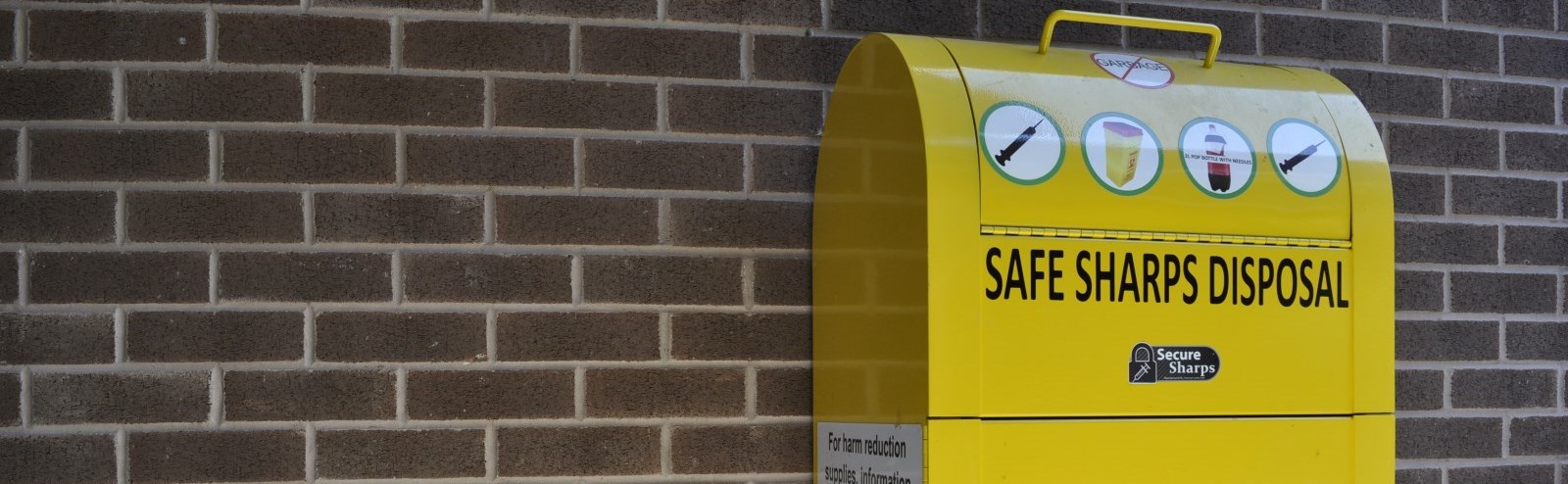
  • Harm reduction supplies like clean needles and pipes 
  • Overdose prevention sites and services 


Harm reduction is not:

  • encouraging substance use
  • anti-recovery or anti-abstinence, or
  • supplying people with unregulated substances.

No. Harm reduction makes recovery more possible by keeping people alive, stable, and connected. People are more likely to change their substance use habits when they feel supported – not punished or judged.

Supports like our Speedy Goals program are examples of recovery-oriented harm reduction programs that let people work towards personal goals in a supported, self-paced environment. 

Totally. Harm reduction programs save lives and money. They reduce overdoses, ambulance calls, and hospitalizations. Harm reduction keeps people alive, connected, and able to access treatment. 

Detox and treatment-oriented resources also play an important and necessary role in substance use support. We need both: immediate, urgent harm reduction supports that keep people alive and connect them with recovery-oriented services, and more readily available recovery options that include things like in-patient treatment and second-stage housing. 

Telling someone to “just stop” ignores the complex realities of trauma, mental and physical health, poverty, colonization and other factors that shape substance use and a person’s ability to access treatment. Long waitlists, strict abstinence requirements, cost, lack of culturally appropriate care, and fear of stigma can all impact how people are able to access treatment options.  

People are most likely to reduce or stop substance use when they feel safe and supported. Harm reduction keeps people alive and connected  so they can navigate treatment and recovery options in a way that makes sense to them.  

Additionally, treatment alone is not the answer to this public health crisis – we need compassionate drug policy and laws; increased community-based health, mental health and social supports to support recovery; and affordable housing of all types. We need a cultural shift that supports people wherever they are on their healthcare journey.

Stigma is the negative attitudes, beliefs or behaviours about or towards a group of people because of their life circumstances. 

This includes public stigma (normalizing language like junkie or addict, assuming criminality of substance users), structural stigma (access to healthcare or housing impeded because of substance use, and self-stigma (feeling underserving of help, or avoiding services out of fear of judgement or discrimination).  

Stigma is a significant barrier to accessing care. If someone is feeling ashamed about their life circumstances, they are less likely to seek support and/or more likely to turn to unsafe coping mechanisms. Your words make a difference.   

Is it? Labelling drug use as bad is an over-simplification of the issue and the people involved. Substance use has always been part of the human experience, and no one chooses to have their drugs contaminated with an unknown toxic substance, or to develop a substance use disorder.  

The reasons people use are varied and complex, and include biology, trauma, poverty, homelessness, colonization, pain, mental health, and more. We need to reframe substance use disorder as a systemic and policy failure – not a personal one. 

Sometimes people living with substance use disorder engage in survival-level petty crime. We don’t condone it, and we also don’t control people’s behaviour in the community.   

We maintain that community crime would be a bigger issue if our programs – where people receive social connection, food supports, referrals to community resources, hygiene and clothing supports, and so much more – did not exist.   

Community crime is a complex issue that’s intertwined with poverty, and economic landscapes. It requires coordinated and collaborative leadership from decision-makers to address community crime and and community comfort.   

We always encourage community members to call the local RCMP if you witness unlawful behaviour.   

Thanks for asking. If you have concerns about the community impacts of the toxic drug supply, poverty, and homelessness, take positive action.  

Write to City Council requesting more resources to address substance use disorder and homelessness in our community.  

Sign up for one of our community-based Harm Reduction and Naloxone workshops to learn more. 

Volunteer or donate to our programs so we can continue to meet individuals’ basic daily needs with compassion.    

We live and work on the homelands and territories of the Tla’amin People. We honour the land, the Tla’amin People, and their treaty and continually seek to strengthen our relationship and responsibilities to them as guests in the territory.